U.S.-Asia Sustainable Development Foundation
Where Global Collaboration Makes Sustainable Impact
Beyond research, I’ve come to appreciate that real impact often happens not just in academic journals but in rooms full of policymakers, industry leaders, and slightly over-caffeinated conference attendees. As official U.S.-China climate talks slowed down, it became clear that someone had to keep the conversation going. That’s where the U.S.-Asia Sustainable Development Foundation (UASDF)stepped in—and where I found myself leading the planning and execution of the Inaugural Green AI Summit and the 2nd U.S.-Asia Sustainable Development Summit at Harvard University.
Of course, pulling off international summits wasn’t for the faint of heart—especially with just six weeks to make it happen. From the moment we had the idea to the moment the first speaker took the stage, I led my team in sending hundreds of invitation emails, securing sponsorships, and coordinating across time zones to confirm 40+ guest speakers, including senior government officials from the U.S. and China, professors from Harvard, MIT, BU, and Tsinghua, and industry leaders from Google, Meta, IBM, and Intel (see the full guest list here). At the same time, we organized two info sessions at Harvard and Stanford for 200+ attendees, designed promotional materials, and managed all event logistics— all while ensuring the programming was substantive and impactful. There were days when my calendar was so packed that I had to pre-schedule time just to take a shower.
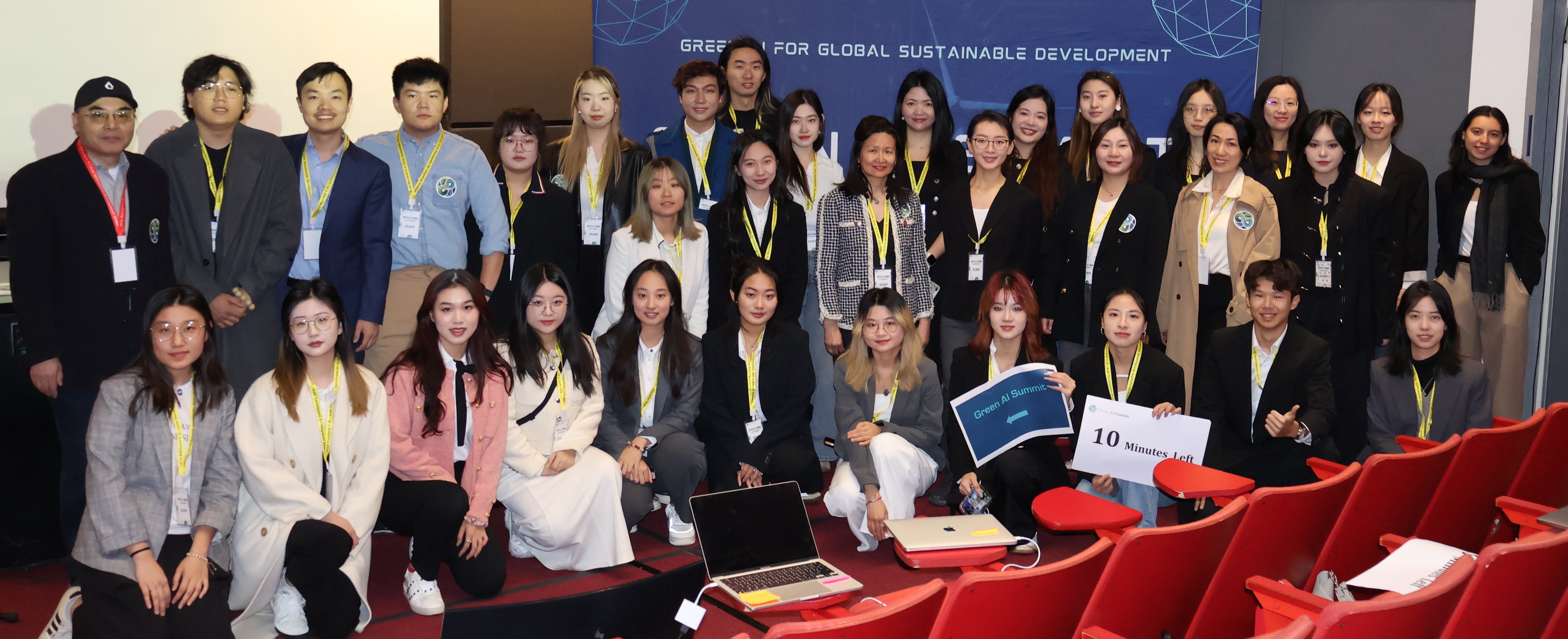
U.S.-Asia Sustainable Development Foundation Summit Team
But somehow, amidst the chaos, we made it work. The Green AI Summit drew 900+ in-person attendees and 7,000+ global online viewers, establishing UASDF as a key player in sustainable development dialogue. I managed 70+ staff and volunteers, ensuring every detail—from speaker coordination to AV setup—ran smoothly. Between last-minute agenda changes, speakers getting stuck in different time zones, and keynote WiFi failures at crucial moments, I quickly learned that entrepreneurial grit is just as important as strategic planning.
Watch the Summit Recording
While the Green AI Summit focused on technology and industry solutions, the 2nd U.S.-Asia Sustainable Development Summit was a more political endeavor, aiming to foster diplomatic dialogue between U.S. and Asian leaders on sustainability (see the impact of the inaugural UASDS summit here). Our goal was to bring together high-level representatives from the U.S. and key Asian nations, including China, to discuss cross-border cooperation on climate policy, trade, and energy transition. As John Kerry noted in his 2024 Harvard talk, official U.S.-China climate negotiations have slowed, but Track II diplomacy—where non-governmental organizations play a leading role in fostering dialogue—has become more important than ever. Guided by this vision, I worked to engage senior officials, policy advisors, and international organizations, ensuring that our summit served as a meaningful platform for exchange beyond government constraints.
Although I have recently scaled back my involvement to focus on my job search, I left knowing that UASDF was on a strong trajectory. Before I transitioned into a less active role, we had already secured commitments from high-ranking officials to participate in future summits and established institutional partnerships with leading organizations at Harvard and BU. The momentum is there, and I’m excited to see how these dialogues continue shaping the landscape of U.S.-Asia sustainability collaboration.